Is Your E-Commerce Platform Wagging the Dog?
Mikel Lindsaar reveals why most e-commerce platforms end up controlling your business rather than serving it. Through examples including a museum identifying VIP visitors and automated customer refunds, he demonstrates what becomes possible when all your data lives in one intelligent system. The result? Faster pages, smarter AI, and genuine customer relationships that drive lifetime value. His advice ranges from the technical to the surprisingly simple: put a phone number on your website and actually answer it.
What if your e-commerce platform is actually holding you back? Mikel Lindsaar, founder of StoreConnect and author of the forthcoming book Customer Commerce, has spent years watching businesses bend themselves around platform limitations rather than the other way around. His solution? Flip the entire model and put your data back in control.
Mikel's journey to this insight came from an unlikely place. As the owner of a bespoke software development company, he had three clients approach him in a single year, all asking him to build an e-commerce platform that integrates with Salesforce. His instinct was to redirect them to Shopify or BigCommerce. Their response opened his eyes to a problem most e-commerce operators don't even realise they have.
The Tail Wagging the Dog
Those potential clients weren't looking for better checkout flows or prettier templates. They were struggling with something far more fundamental.
"Those platforms are all fantastic for the front end," Mikel explains. "They do an incredible job at helping someone buy a widget. What they all genuinely suck at is if I want to access the data in my way, or I want to build automations the way I want to build those automations."
This is what Mikel calls "the tail wagging the dog." Your e-commerce platform dictates how you can access your data, how you can report, how you can contact customers, and how the checkout flow works. Instead of your business processes driving the technology, the technology starts driving your business.
The symptoms are everywhere. Every plugin you add potentially slows down page load times. Your customer data sits fragmented across Shopify, Klaviyo, and half a dozen other SaaS tools. And when you want to do something clever with AI or automation, you're fighting against the limitations of whichever platform happens to be calling the shots.
The Hidden Cost of Plugin Sprawl
Consider what happens as an e-commerce business grows. You start with a basic Shopify store. Then you need better email marketing, so you add Klaviyo. Then reviews, then loyalty, then subscription management, then, then, then.
Before long, you've got 20 different SaaS products running your business. Each one charges monthly. Each one holds a piece of your customer data. Each one adds its own hooks and actions that can slow down your site. And each one represents another potential security vulnerability.
"You now have your data in Shopify, in Klaviyo, and maybe six or seven plugins on random Amazon servers around the world," Mikel points out. "That data is becoming a bit of a challenge from a security point of view."
We were spending £600 a month on Shopify alone, plus Klaviyo fees, plus plugin after plugin. The total cost wasn't wildly different from a unified solution that does everything in one place. The difference? With everything fragmented, the clever automations that actually transform customer relationships become nearly impossible to build.
Creating Moments of Joy
When your data lives in one place, you can start treating customers like humans rather than transactions.
Mikel shares a scenario that will resonate with anyone who's ever been on the receiving end of tone-deaf marketing: "You go buy something from a website. And a couple of days later, you get the email saying, hey, we've got 10% off of the thing you just bought. Would you like to buy it?"
We've all been there. It's infuriating. And it happens because the systems don't communicate properly.
Now flip it around. Imagine a customer buys something 24 hours before you launch a 10% off sale. Instead of sending them the promotional email (which would feel like a slap in the face), your system automatically refunds 10% to their credit card and sends an email explaining what you've done.
"If I got an email like that, I'd be like, are you kidding?" Mikel says. "These moments of joy, treat them as humans. Don't treat them as just a transaction."
This isn't about being nice for the sake of being nice. It's about building relationships that generate lifetime value. The customer who receives that unexpected refund isn't just satisfied; they're delighted. They're telling ten friends about the experience.
The Museum Revelation
A great example involved a museum client who realised they had no idea who was actually walking through their doors.
Visitors would buy tickets and do the tour. But the tour operators had no clue that the person in front of them might be the world's number one collector of exactly the things on display. Someone who could potentially become a major donor. Someone who deserved the VIP treatment, not the standard shuffle through the exhibits.
Mikel's suggestion was elegantly simple. When someone buys a ticket online, that transaction lands in Salesforce. Before they arrive, an AI agent conducts a quick research call to determine whether this person is involved in what we display. If the answer is yes, that information is attached to their record. When they scan their ticket at the door, it pops up on screen that this person's a VIP. Go get Frank to give them the personal tour.
"Really? Could you do that?" was the museum's response.
Yes. And this is just the beginning of what's possible when your data lives in a single intelligent system.
AI Without the Guesswork
The conversation around AI in e-commerce often focuses on chatbots and product recommendations. Mikel suggests thinking bigger, but also smarter.
The key insight is to use AI for pre-processing rather than for real-time calculation. Take an education provider using StoreConnect. When a student completes a course, their learning management system updates their Salesforce record. Salesforce then runs algorithms to determine the next best course for that specific student, based on their entire history. By the time the congratulations email goes out, it already contains a personalised link to their recommended next course.
"Instead of having to send them to a site which is trying to calculate the next best course for that student, you've already done all that work in the back end," Mikel explains. "That page loads within a tenth of a second or less."
The same principle applies to marketing. Instead of asking AI to tell you everything about a customer (which returns a lot of irrelevant data), give it specific parameters. If you sell cars, use AI to determine whether this person is interested in Ferraris, Lamborghinis, Porsches, Audis, or Mercedes? Get back a usable answer, then target accordingly.
"Don't send them a marketing email about the Corvette collection you've got if they're the world's best Ferrari collector," Mikel notes. "It's probably going to insult them more than make them happy."
The Scale Question
There's a perception that solutions like Salesforce are only for enterprise businesses with massive budgets. Mikel challenges this directly.
StoreConnect's starting licence fee is $10,000 US per year. Add three or four Salesforce users at a few hundred dollars per month each, and you're looking at roughly $1,500 monthly for a complete e-commerce and CRM platform. That includes email marketing without per-contact charges, automation capabilities, and AI integration.
Compare that to a Shopify store at £600 per month, plus Klaviyo, plus a handful of plugins. The total cost often ends up similar. The difference is capability.
One of their clients, a plumbing supplies business called Beyond Plumbing (https://www.beyondplumbingsupplies.com), started with just three Salesforce licences. They've since grown to multiple millions in annual revenue and, as they like to say, they're never going to have to replatform. You simply don't outscale Salesforce. Amazon uses it.
At the other end of the spectrum, another client consolidated 76 different e-commerce websites across 26 brands in four countries onto a single StoreConnect platform. They went from four full-time staff members just updating products and pricing to one person for one hour a day. The rest of the team went back to marketing.
The Human Element
For all the talk of AI and automation, Mikel's strongest advice is surprisingly old-fashioned: have a phone number where someone can actually call you.
"Have a way on your website where you have a phone where someone can call you and you answer the phone," he says. "You might not be able to do a 24-seven response. That's totally fine. If you leave a message there, have the voicemail say: hi, this is [your business]. We're going to call you back as soon as we can. Please leave your message."
The critical point is leading with the callback promise, not an apology about office hours being closed.
Why does this matter so much? Because customers looking to call are actively trying to engage. They want to be human. They want a conversation. And they're seconds away from giving up and going elsewhere. But if they feel like they're actually going to get helped, they'll stick around.
"Every customer complaint that you receive on that line is an absolute gift," Mikel emphasises. "If you can turn that customer complaint around and service the bejesus out of them, they will be your customer for life. And they'll go tell 10, 20 more people about the great service they got."
Your Next Steps
Ready to stop letting your platform wag the dog? Here's where to start:
- 1Audit your SaaS stack. Count how many different tools hold pieces of your customer data. Calculate the total monthly cost. Consider what you're sacrificing in capability for that fragmentation.
- 2Identify your "own goals." Where are you accidentally damaging customer relationships through poor automation? The discount email to recent buyers is the classic example, but there will be others.
- 3Find your moments of joy. What could you automate that would genuinely surprise and delight customers? The unexpected refund is just one possibility.
- 4Add a phone number. Seriously. Put it on your website with a voicemail that promises a callback. Then actually call people back.
- 5Think about data unification. Whether it's Salesforce or another platform, start considering what's possible when all your customer data lives in a single intelligent system.
Stop Shooting Own Goals
The fundamental shift Mikel advocates isn't really about technology. It's about perspective.
"Your biggest asset as an e-commerce company is your relationship with that customer," he says. "And your most important customer is the one that's already bought from you."
If you're focusing all your energy on first sales while ignoring existing customers, that's dangerous. If your platform is preventing you from building genuine relationships, that's the tail wagging the dog. And if every communication with a customer feels like a sales pitch, you're missing the point entirely.
The tools now exist to do better. To pre-process data so that pages load instantly. To personalise experiences based on real understanding. To create moments of joy that turn customers into advocates. The question is whether your current platform lets you use them.
As Mikel puts it: "Use your powers for good, not evil. And the clients will reward you."
Full Episode Transcript
Read the complete, unedited conversation between Matt and Mikel Lindsaar from StoreConnect. This transcript provides the full context and details discussed in the episode.
Full Episode Transcript
Read the complete, unedited conversation between Matt and Mikel Lindsaar from StoreConnect. This transcript provides the full context and details discussed in the episode.
Matt Edmundson (00:05)
Well, hello and welcome to the eCommerce podcast. My name is Matt Edmundson and it is great to be with you. If you're a regular to the show, a warm welcome back. And of course, if you're a new listener, a very warm welcome to you. Hopefully you're to find something of interest today in the show. ⁓ If you want to find out more about the eCommerce podcast, go to the website, eCommercepodcast.net. We have recently revamped the whole website.
I would love your opinion on it. People have been sending me messages on LinkedIn, which has been super kind. If you find any bugs, let me know. Just genuinely let me know your opinion on the site. What's it, what's missing. We've done a whole great deal of work on it. Um, but of course you get quite tunnel visioned as we all know, uh, when it comes to websites, especially when it's your own, right? Uh, and so, uh, we'd love your thoughts and feedbacks on that. Go check it out. E-commerce podcast.net. are you there? Sign up for the newsletter.
Check out things like the cohort, the monthly meetup groups that we do, which are free to join. We've got another one, all the time recording. It's not too far away actually. ⁓ so yeah, if you want to find out more about the cohort groups, come check them out. That'd be great to see you in there. Anyway, that's enough about me. Let's get on to today's guest, Michael. Welcome to the show all the way from the land down under. How are we doing?
Mikel Lindsaar (01:23)
We're doing good, Matt. Yep. You're in the UK, I'm in Australia. So it's Tuesday down here. So welcome to the future. It's amazing. You'll all love it when you get here. It's not as bad as everyone's been making out. And you know, the sun still rose as you can see in my background.
Matt Edmundson (01:30)
Yeah.
Yeah.
Well, it's a beautiful thing. The sun's still going to rise. Who knew, right? Who knew that was what was going to happen. But it's early morning for you. It's sort of later evening for me at the time of recording. So you're very bright. I'm kind of a little bit dark. So if you're watching this on YouTube, it's kind of like what's going on here? This is what happens.
Mikel Lindsaar (01:57)
Okay, God, the juxtaposition.
And I have to say, I feel for you about rebuilding a website. mean, is there anything more? ⁓ it, it's one of those things that you go, ⁓ I've got this great vision. And then you just keep hitting stumbling block after stumbling block and getting all the way through that and all the design visions and requests and, we forgot to update this page. And yeah.
Matt Edmundson (02:12)
Mm-hmm.
Yeah, it's, it's, we have our own dev team, right? So it's one of those where even with our own dev team, it's just, it's just such a massive project, you know, just thinking about websites. ⁓
Mikel Lindsaar (02:24)
Nice.
Yeah, it is. I mean, you're rebranding your company, you know, and
going out there, that's, that's incredibly scary in, many aspects. And even when you have a very clear vision, you still don't really know if it's going to work because by definition, you're doing it for the first time. So I feel for you.
Matt Edmundson (02:46)
Yeah.
Well, bless you. Thank you. And we're funny enough. We're to be talking about platforms and e-commerce with your good self. One of the things, what I said, well, it's a great segue. It's like, almost like we're professionals. Almost like we rehearsed it. Which obviously we didn't. Now, one of the things that I, the reason why I redid the e-commerce podcast website, right? It's in effect, it's third iteration.
Mikel Lindsaar (02:52)
What a segue. Look at that.
All right. ⁓
No.
Matt Edmundson (03:13)
We've been going for five years. We've got hundreds of episodes. And what we realized with EP was, or e-commerce, we call it EP internally, because we can't be bothered to keep saying e-commerce podcast. What we quickly realized was there was so much content on there, but it was so difficult to find it. Right. If you went to the website, you could see the latest episode. And that was really about it. Unless you knew to search for a specific thing and the search functionality actually worked.
Maybe that would show you one or two episodes. So we realized that we were missing a trick where Google was concerned by how we'd index the site. We were missing a trick by helping people find content that was relevant for them. And so we embarked on a massive project and we used AI to help us. so what you're one of the things you'll notice, I'm quite proud of this, Michael, tell me what you think. But one of the things that we did was
Within with every episode of the e-commerce podcast, we have now quite a comprehensive blog post, right? And at the end of each blog post is like, these are some action steps that you can take to implement this in your business today. So this is why I think you should scribe, subscribe to the website, to the newsletter and all that sort of good stuff. So we put, add these action points in there. And so we have this beautifully laid out blog post. We have the transcript, we have the video. ⁓ but we also realized that actually we should have categories and subcategories and topics going on.
So what happens is, at ⁓ Conversation, we're going to be talking about, say, Shopify. And we're going to be talking about Salesforce. And we're going to be talking about web platforms. And we're going be talking about how you can do this from an e-commerce point of view. So you're going to fit in several different topics when we come to put your content on the site. So what we wanted to do was to make sure, let's say you fall on, I don't know if we've got the topic, let's say web replatforming or something like that.
We wanted, and this is where AI has been super helpful. We're like, here's a transcript. Here's the topic, write a summary of this blog post specific to that topic. So your blog post, your blog, your video, your whole episode page will appear on maybe five or six different topics around the site. But for every topic that you appear on, there's a different summary written, which connects what you say to that topic, if that makes sense. So rather than just using the generic summary, that was a lot of work.
Mikel Lindsaar (05:29)
Yeah, that's great.
Matt Edmundson (05:32)
I don't know if that was a genius idea or whether it was an unmitigated waste of time, but time will tell. ⁓ So yeah, it's.
Mikel Lindsaar (05:33)
Absolutely.
You know,
that's one of the interesting things about what we're running into with our product and going to market. mean, we do, we do an e-commerce platform, as you said, and I'm sure we'll get into that, but a lot of people don't realize that almost every website out there is actually an e-commerce platform in disguise because fundamentally most websites are in the business of converting a visitor to a sale of some sort, right? Now,
Matt Edmundson (05:47)
Yeah.
Mm-hmm.
Mikel Lindsaar (06:10)
On your website, you know, you have subscribe buttons and things like that, but you also have cohorts and you have things that you sell, right? Which is e-commerce. And you generally, most people think of e-commerce as, know, your t-shirt Shopify store. And that's what they've got fixed in their head. One of the things we wanted to do with store connect. And that's sort of why we came up with a name store connect is let's start connecting that e-commerce functionality to.
Matt Edmundson (06:24)
Yeah. Yeah.
Mikel Lindsaar (06:35)
Many more different types of websites. So we have a lot of clients that are actually running membership organizations or associations or things where they need to sign up for a transaction. And we built a demo website, which because Salesforce has got this big push with AI. We've had clients where all of their data is already in Salesforce and we've been able to turn on AI features.
where that agent can read everything on the website and respond back with valid data about what's on that website within four days from signing the agreement to do it to publishing it live in production. Because it's all about the data, know, getting that data into the AI in a reliable method would have probably been one of the hardest parts of that whole process. And this is where, you know, what we're doing just makes that really simple. Or we're seeing our clients being able to do that in a very, simple way, which is really exciting.
Matt Edmundson (07:13)
Mm-hmm.
Yeah.
Yeah, no doubt. I'm intrigued by this, right? Because like you say, the default for, a lot of people listening to the show will be using Shopify. And I get it. I understand the reason why. I have used Shopify numerous times in the past, actually. We don't currently use Shopify on any of our e-commerce sites. We use a different platform. We use our own platform, actually. I'm curious.
Because until we had, until we met, I'd never thought about this idea of building an e-commerce platform on something like Salesforce. In my head, Salesforce was like this, you know, CRM that sort of sat in the cloud over there that sales organizations used because it was going to be enterprise level cloud-based software that had absolutely nothing to do with me selling widgets over here to, you know, penguins or whatever.
And so when you talked about this, I'm like, this is one of those most intriguing sort of combinations. You know, I'm thinking like David Beckham, Victoria, you know, kind of combo. No one really saw come in, but when it happened, you kind of go, well, that makes sense. I'm kind of curious how you came to this point.
Mikel Lindsaar (08:55)
Yeah, I mean, good question. One of one of our clients just to give people a broad idea of what store connect is. One of my clients said it best when they said it's the best of Shopify and WordPress all built inside of Salesforce. And I've begged to use that as a tagline, but the lawyers say no. So, but that gives you list is a good idea of what it is. Basically, it's a full content management system, point of sale system, subscription platform.
Matt Edmundson (09:09)
Mm.
Mikel Lindsaar (09:23)
and e-commerce platform all built inside of sales cloud. You know, we've had clients migrate and turn off 20 or more SaaS products in the process because, you know, they don't need all these plugins and stuff because Salesforce does it. But where I got, how I got to the point of building this thing was many years ago, I had a software development company, which I still happen to own. It's called Re-Interactive. They do bespoke web-based and mobile.
web applications, like basically like what your website is. Although having look at your website, we could build that whole thing in store connect, by the way. But that just just saying, I'm just putting that out there. But what I got was I had three different clients in a row call me in a one year period. And they said, Michael, can you help us build a e commerce platform that connects to Salesforce, right? And I went, I mean,
Matt Edmundson (09:59)
Okay.
Just putting that out there,
Mikel Lindsaar (10:21)
Yeah, I can take your half a million dollars to build a bespoke Shopify, but why aren't you using Shopify? Right? It really confused me. Why aren't you using Shopify? Why aren't you using BigCommerce, Magento, all of these other solutions, even Demandware, which at the point was an e-commerce product that connected to Salesforce, right? And Salesforce then bought that and turned it into their Commerce Cloud enterprise product. And the answer that came back really surprised me, but
opened up the opportunity. And the answer was those platforms that you mentioned are all fantastic for the front end. They do an incredible job at helping someone buy a widget. What they all genuinely suck at is if I want to access the data in my way, or I want to build automations on that, the way I want to build those automations, you know, if you want to do various things with these platforms, and they're all getting better at this, I'm not saying they're all useless at it, but
If you want to build automations on that, you sort of stuck to like we'd like to say the tail wagging the dog, you know, the e-commerce site is dictating how you can get your data, how you can report, how you can contact, how the checkout flow works, you know, all this sort of stuff. It's being dictated by that platform. And what we did was we sort of flipped it and went, well, let's use Salesforce as our database.
Matt Edmundson (11:22)
Yeah.
Mikel Lindsaar (11:41)
and then run the website off that database. And as long as you make the records in Salesforce correct, and you modify them in any way you want, store connects going to be correct. And this opens up a whole range of things like a good example, we had an education provider using store connect, a student completes a course, right? And that course completion happens off on some learning management platform.
That learning management platform updates their Salesforce record that they've completed that course. Salesforce then kicks off a post-processing or pre-processing set of algorithms that determine what's the next best course that that student needs to sign up on and caches all that data into their student record, having looked over their whole history of every course they've done. So by the time the student gets the email saying, congratulations, here's your certificate on your course, in that email is embedded the link
this is your next course. So instead of having to send them to a Shopify site, which then in the page request is trying to calculate the next best course for that student, you've already done all that work in the back end. And that page loads within a tenth of a second or less, because you're not having to do all this pre-processing on those records. You can do that when you get the data. And because things like that work,
Matt Edmundson (12:39)
Mm-hmm.
Yeah. ⁓
Mikel Lindsaar (13:03)
we can really optimize pages. Like if you go to get store connect.com and don't accept any of the cookie banners and just go into Lighthouse in Google Chrome, you'll see that our website runs at like 98 on Lighthouse or in the high nineties. And that's running store connect, you know, so we're able to put a lot of this pre and post processing back into Salesforce to get the client exactly what they want and get their customers going down the exact journey that they want.
as opposed to the journey that's been dictated by the fundraising platform or, you know, cause we do nonprofits, we do all sorts of things.
Matt Edmundson (13:35)
Yeah.
Hmm. That's really interesting. And again, you're coming back then aren't you to understanding, I suppose, the power of data and getting data in and understanding if you manipulate it in certain what manipulates maybe the wrong word, yeah, if you modify, yeah, yeah, understand it in certain ways. It gets you transform it and it using that data to then
Mikel Lindsaar (13:48)
Mm-hmm.
That's probably close. Modify it, change it. Yep.
Transform it.
Matt Edmundson (14:06)
make the customer journey easier.
Well, that sounds like a wonderful thing. and I can see why people would struggle, you struggle with Shopify and that there's going to be people listening to the show. know it, who are going to go, well, you can do that in Shopify, mate. Cause I've done this, that and the other. ⁓ yeah. With some X.
Mikel Lindsaar (14:25)
cost you again with a plugin. And, and, know, that's, that's
the thing, right? It's the plugins, every plugin that you add, not every, that's, that's a simplification. Most plugins you add to Shopify are going to be doing some sort of pre-processing hooks or actions that can slow down your page load time. And there's a whole industry out there of plugin optimization experts that, you know, make sure that these things aren't
Matt Edmundson (14:33)
Mm.
Mm.
Mikel Lindsaar (14:52)
And this isn't just a Shopify problem. This is a every year commerce platform problem. We bypass that problem by allowing you to do that pre-processing when the customer is not visiting your website. I'll give you a really, really interesting example. was talking to a nonprofit this morning, actually just before this podcast. And they said, look, one of our biggest problems is that we have this fantastic museum of a certain type of thing.
Matt Edmundson (14:55)
No, this is yeah, every platform problem.
Mikel Lindsaar (15:21)
We have visitors who buy tickets and rock up to the museum and do the whole tour. And we have no idea that they're the number one collector of the things that we've got in the museum worldwide. And we should actually be talking to them about doing a donation to the museum, right? Because they are like industry leading experts in this area. They collect the things that we show and we want to get them involved, but the tour operators have no idea who this person is. And I said, well, why don't you.
Matt Edmundson (15:40)
Mm-hmm.
Mikel Lindsaar (15:51)
in-store connect with Salesforce, when they buy the ticket, that's going to end up in Salesforce. You then use Salesforce's agent force to do a quick call out to an AI and say, Hey, does this person have anything to do with these list of things? And if the response comes back, yes, update that data into the contact record so that when the person comes into the event and scans their ticket, it pops up on the screen that this person's actually a VIP, go get Frank to come in and give them the tour.
And they're like, holy, like, really? Could you do that? And this is just an example of where you can start leveraging some of these tools. But the problem is that you just hit on, it's all about the data. You have to have that data in one spot in a system that you can program and modify.
Matt Edmundson (16:24)
Yeah.
Yeah, it is. But it's also thinking, think, around ideas. So the guy in the museum is going, really, you can do that. It's the understanding that some of these things start to become possible because I think in a lot of people's minds, these things are possible in e-commerce if you're Amazon, right? And you've got infinite development budgets, really, right? But actually, there's one of the things that's happening, I think, with AI is this sort of great
Mikel Lindsaar (17:01)
Yeah, right. Exactly. Yeah.
Matt Edmundson (17:09)
democratization, isn't it? This sort of the leveling of the playing field where technology is concerned and the ability to access things. But it just requires you maybe to think a little bit differently or to talk to somebody who can maybe point you in the right direction and sort of brainstorm some of these things with you, right?
Mikel Lindsaar (17:30)
Yeah, no, totally. And, you know, you mentioned the whole enterprise level stuff of Salesforce. Very true. You know, Salesforce is expensive, you know, not going to split hairs there. Although, I mean, they have released a free version. It's a very cut down version. There are slightly more expensive ones that work with store connect. And then there's the full versions that work with store connect. But the thing about store connect is with Salesforce is that
We had a company come along beyond plumbing supplies. They're fantastic. If you go to the website, it's Neo Pink. ⁓ And you can't actually, they were three plumbers that got together. So they knew nothing about technology. And there were three plumbing friends that got together and said, you know what, we're sick and tired of going to plumbing websites that deal with the end consumer as well as plumbers. Cause we've got, very different target markets. know, a plumber knows what he wants and doesn't want to be hit with different random stuff.
Matt Edmundson (18:25)
Mm.
Mikel Lindsaar (18:30)
So they build a plumbing business straight off store connect and they purchase three Salesforce licenses, store connect and Salesforce ⁓ with their Google apps subscription. And they've just grown from that all the way to multiple millions of dollars a year. And they're just continuing to grow. And they put the investment in early and now they've one of their favorite quotes about what their decisions were was that they're never going to have to re platform now. Right. So you're not going to outscale Salesforce. You just won't.
Matt Edmundson (18:53)
Yeah.
Mikel Lindsaar (18:59)
I mean, Amazon used Salesforce, so it's, you're not going to outscale that and you can start quite small.
Matt Edmundson (19:06)
Yeah, I'm on the website now and I get what you mean about the neon pink. I've just had a quick look. It's it.
Mikel Lindsaar (19:12)
And you'll notice
you can't buy anything. If you go to look at a product, it says log in for pricing. Right. Yeah. So even with that barrier, they're growing massively very, very fast because they identified their public very much targeted to that one public. And they're really servicing the bejesus out of them and making sure that those publics, you know, are really happy, but they're using AI in all sorts of random ways. Again.
Matt Edmundson (19:17)
Okay, so it's trade supply. Yeah
Yeah.
Mikel Lindsaar (19:41)
Because it's all in one system, they're doing things like pre-qualification of someone applying to get access to the system, right? Which reduces the amount of work they need to do things like this, that you wouldn't, it would be very hard for you to do without your data in one system, right? Because now you're going to try and connect your CRM to AI and well, what data do I send to that AI? Is that data going to be used for other platforms? You know, that is really the, the, the strength of where StalkNet and
Matt Edmundson (19:43)
Yeah.
Mikel Lindsaar (20:10)
Salesforce come in, think, is that trust layer with the AI with what they're doing with Agent Force is really quite smart, I think.
Matt Edmundson (20:18)
It's interesting. One of the things that I wanted to ask you about actually was cost here. Because I would say, I want to go back maybe seven or eight years in time. Might not be exactly that time, but it was around that sort of time. we were like, I think we were just trying different email providers and just seeing what different email providers had to offer.
We decided for reasons which I can't entirely remember, if I'm honest with you, we decided to try HubSpot. We're like, let's go to HubSpot because HubSpot is like, there was some really interesting things back then about the HubSpot platform that I thought, well, this will be interesting, you know, if we can exploit, ⁓ some of these features in e-commerce, but the cost.
was so cost prohibitive because they were built for agencies that had a thousand clients. And I'm coming in and going, yeah, I've got about 150,000 people on my database. And they're going, that's, that's, that's just stupid money because they charge by the contact. Right. And we were like, this is, I mean, we didn't stay with them long because the cost was just nuts. Um, compared to the benefits that we were getting, the things may have well changed with HubSpot. Maybe they're just, you know, still not really e-commerce. So I'm curious to just
Because in my head, Michael, correct me if I, you I'm going to be wrong here, but in my head, Salesforce was this platform, like I said, that was sort of for big enterprise companies that had salespeople a bit like Cubspot sat over there. ⁓ and e-commerce was its own little thing in the corner over here and had nothing to do with it. ⁓ so I'm kind of curious, does it, does it work like that or is it, ⁓ things changed?
Mikel Lindsaar (22:04)
can't speak for HubSpot. mean, we, our starting license fee, it's on our website is 10 grand US for the year for a basic store connect store. You can get three, four Salesforce users for three or $400 a month, $500 a month, depending on who you're talking to at what time. think the list price might be 800 for four. Uh, so, you know, for a couple of grand a month, you can have a e-commerce and CRM platform.
Matt Edmundson (22:25)
Mm-hmm.
Yeah.
Mikel Lindsaar (22:34)
which does emailing does not charge by contact does not charge by visitor. ⁓ we've got clients spending about that much bit less that have, you know, a hundred thousand skews with 50,000, a hundred thousand customers that they're contacting at different times. And that's all automated with flows and automations and things. So it's not, it's not Shopify starter edition shape, but it's not designed to be right. Where, where are companies?
Matt Edmundson (22:38)
Mm-hmm.
Mm.
No, but it's not crazy expensive either, is it
really? Like if you went to a comp... Yeah, I think that's probably... In some respects, that's quite cheap. I appreciate Shopify is its own little quirks. Yeah. Because you're bringing it all together, aren't you? Yeah.
Mikel Lindsaar (23:04)
Like a grand and a half a month. A grand and a half a month.
With that full automation, right? And, and automatically, yeah,
automatically hooking into AI, being able to have a widget on your website that says, tell me what's happening. Tell me about the last five podcast interviews of the e-commerce podcast. And it just comes back with a list with links, with summaries, you know, all of that being able to be done with just configuration. It's, it's pretty affordable.
Matt Edmundson (23:27)
Yeah.
Mm.
It's really interesting. Yeah. Cause I mean, I'm just thinking of a site that we've got, um, that we just took off Shopify actually was 600 pounds a month. Um, for basics, I wasn't really turning anything over. Yeah. Yeah. 600 quid a month. Plus then you've got to throw in your Clavio fees. They want 400 quid or 500 quid, depending on how many contacts you've gotten, whatever their pricing is. Plus, plus, right. You've got all these different things. Yeah.
Mikel Lindsaar (23:47)
Right, well that's about the same price.
And how many plugins on the store, right? And each
of those is another SaaS product, another 20 bucks a month or 30 bucks a month. And it's not even just also the price, right? You now have your data in Shopify, in Clavio, and maybe six or seven plugins on random Amazon servers around the world. Like that data is becoming a bit of a challenge from a security point of view. See, DoorConnect, we're concentrated on that. Now there's been a couple of recent alerts on Salesforce that they've had data breaches.
Matt Edmundson (24:05)
Yeah.
Mm-hmm.
Yeah.
Mikel Lindsaar (24:29)
But if you go actually read those, all of those data breaches have been with third party connected systems that were exposing Salesforce data. So Salesforce itself wasn't the cause of the breach. But this just points out the more plugins and more third parties you have accessing your data, exponentially more attack surface you have for, for hackers and things. So, you know, it is, it is a really interesting challenge. In fact, we did an analysis of store connects.
Matt Edmundson (24:34)
Mm.
Mm.
Mm.
Mikel Lindsaar (24:57)
closed lost reasons, you know, like on an opportunity, why didn't they go ahead? And the top one by like 80 % of the closed lost reasons were why didn't we know about you a year ago when we were replatform?
Matt Edmundson (25:01)
Mm-hmm.
Nah.
Mikel Lindsaar (25:13)
And, it's a bit like, my God, I guess a business owner is just like heartbreaking. But, but it's a great thing because they're like, look, we've put you in our list. We'll contact you in two years when we're reevaluating, but you know, it's, it's one of those things. It's really interesting.
Matt Edmundson (25:18)
Yeah, no it is totally I get that.
Yeah,
yeah, no, absolutely. What are some of the, I mean, you know, what are some of the clever things that we can start to do now? You know, you've got AI and I know you've got your platform and you've seen it on other platforms to sort of generally, what are some of the things that we should be thinking about where platforms are now concerned, some of the things that, you know, we could look to do maybe going.
into my Tuesday, you know, into tomorrow. I'm kind of curious because obviously you're at the forefront. You're seeing these things in Salesforce. You're seeing these things being developed elsewhere. You got a lot of clients doing a lot of cool things. so you've mentioned things about, you know, the, the museum. ⁓ but what are some of the, the other cool things that you're seeing?
Mikel Lindsaar (25:54)
Yeah.
I personalization and treating the customer as a customer, you know, and a human. I'm 90 % of the way through a book called customer commerce. And the first 10 of that is called be human. And I think this is something that people lose sight of very easily, especially when I'm Black Friday. Your biggest asset as an e-commerce company is your relationship with that customer.
Matt Edmundson (26:17)
Mm.
Okay.
Yeah.
Mikel Lindsaar (26:41)
And your most important customer is the one that's already bought from you because they're much more.
effective at getting to a second sale and the third sale and a fourth sale, that's going to build up a relationship, right? If you're focusing all of your efforts on the first sale, of course you still need those. not saying don't, but if you're ignoring your existing customer cohort, that's dangerous. And one of the things that we can do now is we can start analyzing that behavior and sending them the right message.
common thing that people make a mistake on is, and everyone's experienced this, you go buy something from a website. And a couple of days later, you get the email saying, Hey, we've got 10 % off of the thing you just bought. Would you like to buy it? And, and you're like, my God, if you want to destroy my relationship with you, that's the way, right? We now have the tools where you could have that, not send that person that email, right? That would be a good start, but B, I mean,
Matt Edmundson (27:31)
Yeah.
Yeah, yeah, yeah, yeah, yeah.
Mikel Lindsaar (27:49)
If you're already giving away that money, send that person email saying, Hey, you just bought this thing, but it was like 24 hours before we launched a 10 % off. We've just automatically refunded 10 % of your purchase back to your credit card. Now with, with store connect and like with, with all that data and one thing, I shouldn't just keep saying store connect. You could do this in multiple systems. It's just how hard it is. Right. Now, if you did automations around that, I tell you, if, I got an email like that, I'd be like, are you kidding?
Matt Edmundson (28:03)
wow. Yeah.
Mm-hmm.
Mm-hmm.
Mikel Lindsaar (28:19)
These moments of joy, treat them as humans. Don't treat them as just a transaction. And this is where the whole AI evolution ends. And putting that data into one spot and having that data accessible to intelligent, logical things starts to enable that relationship. You need to work out how to have that conversation more with that customer. I'll give you another example. ⁓ Back to the museum, it was a great call. I said to them, look,
Matt Edmundson (28:22)
Yeah. Yeah.
Mikel Lindsaar (28:48)
If you've, if you do a request on this person and find out they're an absolute, ⁓ they're, they're in a different industry, but let's say they're a car buff, right? So say you do an AI request and you find out that they're the world's best Ferrari collector in the world, right? Don't send them a marketing email about the Corvette collection you've got, because it's probably going to insult them more than make them happy. Right? So this sort of thing, you, you should start capturing that data and utilizing it.
Matt Edmundson (29:04)
Mm-hmm.
Yeah, yeah.
Yeah. Yeah.
Mikel Lindsaar (29:17)
Use your powers for good, not evil, right? And the
clients will reward you.
Matt Edmundson (29:22)
So this is, ⁓ this is interesting, isn't it? So, I mean, I'm making the assumption here that I understand what's going on, which is always a dangerous thing, Michael. but in essence, you've got Salesforce AI, you're saying this is this person, so-and-so, person go away and find, go search the web and find out some information about him and then pull it back in and analyze it. Right. ⁓
Mikel Lindsaar (29:29)
Haha.
Yeah. Or more
importantly, that the, anyone could do this. You wouldn't need Salesforce, right? Given this contact record or given this persona.
Go out to the web and have a look and see if they're interested in any of these things that I do or which parts of these things that I do are they interested in? You don't want the summary coming back. Like if you're selling, I don't know, art, right? You don't want the summary to come back to talk about how they're, you know, an avid soccer player, unless you do something with soccer, right? Or football, I should say. I'm talking to a Brit here. ⁓ you can translate. Okay. ⁓ but.
Matt Edmundson (30:17)
Yeah, so we can translate. It's
Mikel Lindsaar (30:24)
What you might do is you might say, ⁓ a prompt, something like I run an e-commerce store that sells these sorts of items. Given this persona, please go research them and see if they're interested in anything in this. Right. And you don't have to use the number one top model for this either. You can use the super cheap ass one, right? Because it's just a data lookup. It's not a deep thinking research process. And.
Matt Edmundson (30:45)
Mm hmm. Yeah.
Mikel Lindsaar (30:50)
It can come back and say, actually, they're really interested in Ferraris, you know, cause they're a collector. Great. You now have that data in your system. And then when you do a marketing campaign, the trick is here, have a predefined list of things that you want to know your customers do. So, you know, if, if we sell cars for a living, we, sell Ferraris and Lamborghinis and Porsches and Audis and Mercedes. Right. So we have a list of five things. Tell the AI is this person interested in any of those five?
Matt Edmundson (30:58)
Mm.
Mm-hmm.
Mikel Lindsaar (31:19)
and tell
me which one they're interested in. And it comes back and says they're interested in Porsches and Audis. Okay, great. Now put that into your marketing system and then target them with that. Right? Don't just say, tell me about this customer, because you're going to get back all this guft, which you're not going to be able to use.
Matt Edmundson (31:35)
Yeah. So that again, that comes us down to how well you're prompt with AI, but that's very important. This is really interesting stuff. One of the things that we started to think about, I'm not sure if I've mentioned this on the show before, but one of the things that we started to think about four or five years ago was this idea of
I don't know what, I can't remember what we called it. I just called it the old fashioned customer account relationship thing, you know, where, and you'll do this in your, in your SaaS business, but in e-commerce, it's one of those things that just sort of disappears. You don't have the sort of old fashioned customer account person, right? It's just an e-commerce. You're just, you're just, you know, your number in the database.
I never have anybody from Amazon call me and go, hi, Matt, I'm Susie. I'm your account manager. know, how can I help you? Can I come have lunch with you and get to know you and all that sort of stuff? It just doesn't happen. And I started to toy around with this idea of what would happen if we somehow could figure a way to do this in e-commerce, right? So some of the stuff you've been talking about, how do we, how do we both automate this?
but also at the same time bring a level of personalization which makes it feel unique and different. And how could we do that with the old customer account management thing? Because that would, I think, transform e-commerce just from something that's just purely transactional to something that is actually quite relational, right? Just like, I think the company that does this well is Apple. I rarely buy anything off the Apple website, mainly because I just email
you know, the guys at the business team in Liverpool, I've got their email address, just email them and say, this is what I want. And they come back and goes, great. And they call me up, take my credit. It probably takes longer, right? But it's that personal interaction that just massively has a big impact. And so I'm kind of curious as you're talking, I'm remembering this idea and thinking, this is probably something that we could do with the old Salesforce thing.
Mikel Lindsaar (33:34)
Mm-hmm.
Yeah, you could. the thing is, right.
We're not there yet at the point where AI could call Matt and say, get a map. I'm your customer rep at blah, blah. And I'm an AI agent. Like there isn't an, there's something in, in computer graphics called the uncanny Valley where. Computer graphics are getting so good that you look at them and you're like, is that, is that computer generated? But the uncanny Valley is this feeling that you get when you look at something that's
almost perfect or too perfect. And it feels off. It feels strange. It feels unhuman, right? You get that with AI on the phone as well, right? And the problem with that is if you're not upfront about it, if you're pretending this is an actual human when it's not, you're going to destroy trust. So that's a careful thing to work out.
Matt Edmundson (34:27)
Mm.
Yeah, you do.
Mm-hmm.
Mm-hmm.
Mikel Lindsaar (34:45)
The other aspect on that is the reason no one does client account managers is because the margins aren't there and you'd just be losing money all the time. So what you could do is use AI to cultivate the database in terms of not just giving them the next best thing to buy from a sales point of view, but use that system like your podcast. For example, you've got a million and one different podcasts and I obviously probably not a million, but
You've got all these different podcasts. You've got all these different articles, all these different case studies, different people will need access to different data. AI would be very good at going, given this person, what information would they be interested in and sending them that article? You know, hi there, Matt. It's been a few months since you, ⁓ no, hi there, Matt. Thanks so much for being a past customer. Really appreciate it. Thought you might like this bit of content end of con cycle, right? Not.
Matt Edmundson (35:17)
Mm.
Yeah.
Mm-hmm. Yeah.
Mikel Lindsaar (35:42)
By the way, this is the next product you should buy, right? Every conversation with your client shouldn't be a sales pitch. And I think that's sort of what you're trying to work towards. Your client account manager was someone you'd have lunch with or have a conversation with, or, you know, chat about the football or, or the ashes actually let's chat about the ashes. That'd be great. Yeah. for anyone in America, the ashes is a cricket match between Australia and England where Australia basically every
Matt Edmundson (35:44)
Yeah.
⁓ Yeah, it is.
Mm.
Yeah, let's not.
Move on.
And we are getting properly
Mikel Lindsaar (36:12)
Every year and a half, we just trouts the British. ⁓
Matt Edmundson (36:12)
mullered right now. And you feel pretty good about it too.
Mikel Lindsaar (36:18)
But we're not like, you know, uppity about it or anything. We just know we're
Matt Edmundson (36:20)
Hahaha
Mikel Lindsaar (36:25)
But that's the relationship you want to build. So instead of trying to use the AI to replace the human, use the AI to help get the right information to the customer from your database and to treat them as like stop shooting own goals, right? Stop shooting yourself in the foot by sending the 10 % discount voucher out to the person that just bought it from your website. Use AI for that. And then
Matt Edmundson (36:37)
Mm. Mm.
Yeah, yeah, nah, I'm with you.
Mikel Lindsaar (36:54)
open up the opportunity and have on there, you know, one of the actual, I'll hold this to the end of the call. One of the, one of my hot tips for e-commerce, but, ⁓ you know, that's a, that's a real thing. I think you should really have a look at how to, how to make that work.
Matt Edmundson (37:09)
Well, I'm going to, I'm always as you just said, I will hold that until the end of the call. I'm realizing I'm like five minutes away from the time. It's just getting away from me. It's like, holy cow. I'm just getting into this conversation. We did, we did. That was my fault. Dodgy technology, my dodgy Apple Mac. Listen, Mike, I genuinely love the conversation, man. How do people reach you? How do they connect with you? How do they find out more about what you guys do if they're listening and thinking, that sounds interesting. Where do we go?
Mikel Lindsaar (37:20)
We did start a little bit late off the top of the hour. So we can go a little bit further if you want. That's right.
Sure. I'm on LinkedIn and X under Linzer, Michael Linzer. Michael spelt funny. M-I-K-E-L. It's actually the phonetic way to spell it when you think about it. Mike. ⁓ The website is get store connect one word.com get store connect.com. Go have look. We have lots of talk to us problems, talk to us forms and things all over it. One of our favorite things to say to our prospects is ask us your toughest e-commerce questions because we can usually solve them.
And that's what we love doing. We just love helping companies get out of, of binds. mean, we had one company that had four staff updating all the products and pricing on their website full-time. It's all they did. And they had 76 e-commerce platforms, 76 different e-commerce websites across 26 brands in four countries. Right now think about that as a painful experience. And they've moved all of that onto one store connect platform in Salesforce. So they've gone from four people full-time to.
Matt Edmundson (38:31)
Yeah.
Mikel Lindsaar (38:37)
one person for one hour a day and the rest are back on marketing. So, you know, we can solve really tough problems and we'd love to talk to you about that.
Matt Edmundson (38:43)
⁓
I'm just obviously listening to you talk there. Multi-site then becomes a possibility with what you guys do. So if I have more than one site, yeah, yeah. Okay, cool.
Mikel Lindsaar (38:51)
very much so. Very, very
much. As I said, you know, that client has 76 different D2C websites running across 26 brands in four countries, as well as a B2B site in every country that has all of the products of every brand in that country, which is different from country to country. And that's all handled with one set of data records. So, you know, the efficiency gains are just off the charts. It's really...
Matt Edmundson (39:14)
Yeah.
Yeah.
Mikel Lindsaar (39:20)
really crazy.
Matt Edmundson (39:21)
Fantastic. Fantastic. Well, let me do this thing, Michael, where I turn the mic over to you. Your top tip, you know, we call it saving the best or less. So for people that have made it this far, go for it. Give us your two minute riff. The mic is yours, my friend.
Mikel Lindsaar (39:34)
I don't know if I'll need two minutes, but fundamentally like that first point of my book is, be human. My top tip for e-commerce companies is have a way for someone to call you. Have a way on your website where you have a phone where someone can call you and you answer the phone. Right now you might not be able to do a 24 seven response. You might be too small for that. It's totally fine. If you leave a message there and say, call this number, there is a voicemail and the voicemail says, hi there.
Matt Edmundson (39:39)
Mm.
Mm-hmm.
Mikel Lindsaar (40:01)
We will call you back. That's the first thing you say on that voicemail. You don't say, hi, we're sorry, our office is closed. You go, hi, this is blah, blah. We're going to call you back as soon as you, as soon as we get back, please leave your message. Tell us what your problem is. Tell us your email address or whatever it is that you're using on the website. We will solve it because I care about making sure our customers have a great experience. Have that on your website because that customer is
Matt Edmundson (40:07)
Mm-hmm.
Mm-hmm.
Mikel Lindsaar (40:27)
looking to call you, they want to engage, they want to be human, they want to have a conversation and you're seconds away from losing them. They're going to go somewhere else. But if they feel like they're actually going to get helped, they'll stick around. And I tell you, every customer complaint that you receive on that line is an absolute gift. Because if you can turn that customer complaint around and you can service the bejesus out of them, they will be your customer for life. And they'll go tell 10, 20 more people about the great service they got.
Matt Edmundson (40:51)
Mm-hmm.
Mikel Lindsaar (40:57)
So that's my top tip. You might even lose money on that one transaction. That's totally fine. Just selfishly service that customer and help them across the line and you'll get that reward in the future.
Matt Edmundson (41:02)
Mm-hmm.
Yep.
No doubt. Lifetime value matters, right? So, the book, remind you, the book you're writing, what's it called?
Mikel Lindsaar (41:12)
Mm-hmm.
Coming out soon. I've been saying that for about six months. If anyone's written a book, you know what I mean.
Matt Edmundson (41:18)
Hahaha
I'm writing one at the moment, I know exactly what you mean.
Mikel Lindsaar (41:24)
I'm on like the last chapter.
I've had so many people say just throw it in their eye and I'm like, no, that's the point, right? Oh my god. It's called it, it's going to be called customer commerce. And it's all about creating commercial relationships with customers who are actually just humans. Right? So it's bringing back the let's stop talking about transactions with people. Obviously, they're important for metrics and the finance officer.
Matt Edmundson (41:51)
Mm-hmm.
Mikel Lindsaar (41:53)
Let's start talking about building these direct relationships with customers and really generating a community of people around you that are going to work with you.
Matt Edmundson (41:59)
Mm-hmm.
Fantastic. Love that. Well, let me know when it comes out. That'd be great. And we'll maybe get you back on the show to talk about customer commerce next time. It'd be fun to go through the book. But Michael, listen, genuinely love the conversation, man. ⁓ It's just gone by the million miles now, but really loved it and love what you guys are doing. So thank you for coming on the show and thank you for sharing everything with us.
Mikel Lindsaar (42:05)
I will, absolutely.
Sure, no worries.
Yep. And thank you for sending that English cricket team over there. Fantastic.
Matt Edmundson (42:29)
That was not fantastic.
Mikel Lindsaar (42:31)
See you Matt. Bye everyone. Thanks for listening.
Matt Edmundson (42:35)
Thanks everybody. And thank you so much for joining us on the e-commerce podcast. Thanks for listening wherever you are in the world. I will see you next week. Don't forget to like and subscribe and do all of that sort of good stuff. Cause you know, you should, you just genuinely should. But I will be back next week. Thank you for joining us. That's it for me. That's it from Michael. for now.
Meet your expert
Mikel Lindsaar
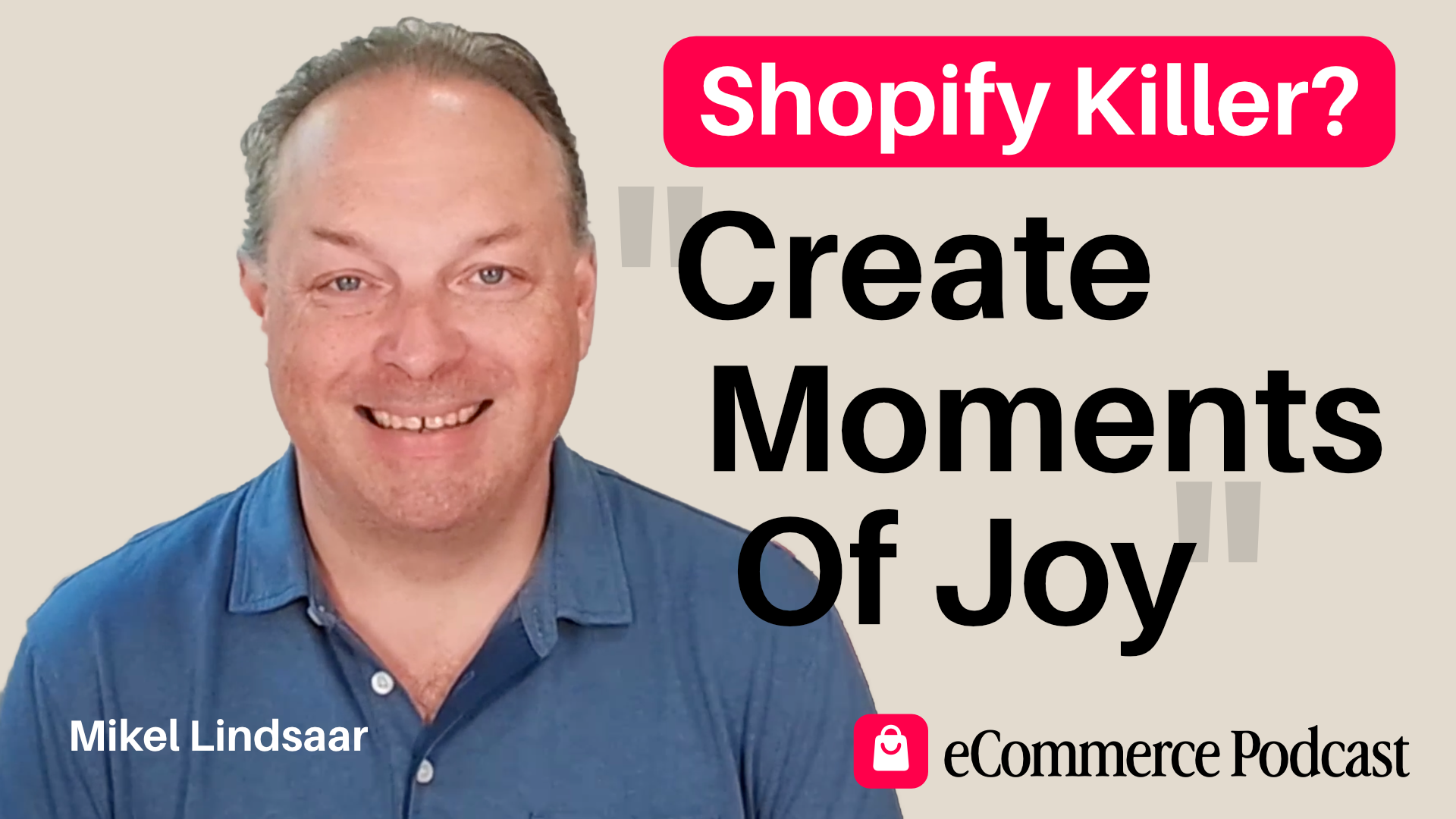
Mikel Lindsaar
StoreConnect